Overview
The 6 days Machame route does not include the extra day for acclimatization and is therefore recommended for mountain climbers with previous climbing experience with ability to acclimatize faster. The Machame route, sometimes known as the “Whiskey” Route, is most likely the most popular route for climbing Mount Kilimanjaro. The fact that the trail’s surroundings offer unrivalled visual beauty is Machame’s positive and strong point.
This trail, however, is a popular choice among adventurers since it is more difficult, steep, and difficult than the other routes on Mount Kilimanjaro. As a result, climbers who choose this route should have prior high-altitude trekking expertise. Because the Machame trail is shorter, it is ideal for climbers who only need a few days of climbing or who do not have enough time on their hands; otherwise, the longer the route, the higher the chance of reaching the summit.
Quick Facts
Day 1 Machame Gate – Machame Camp
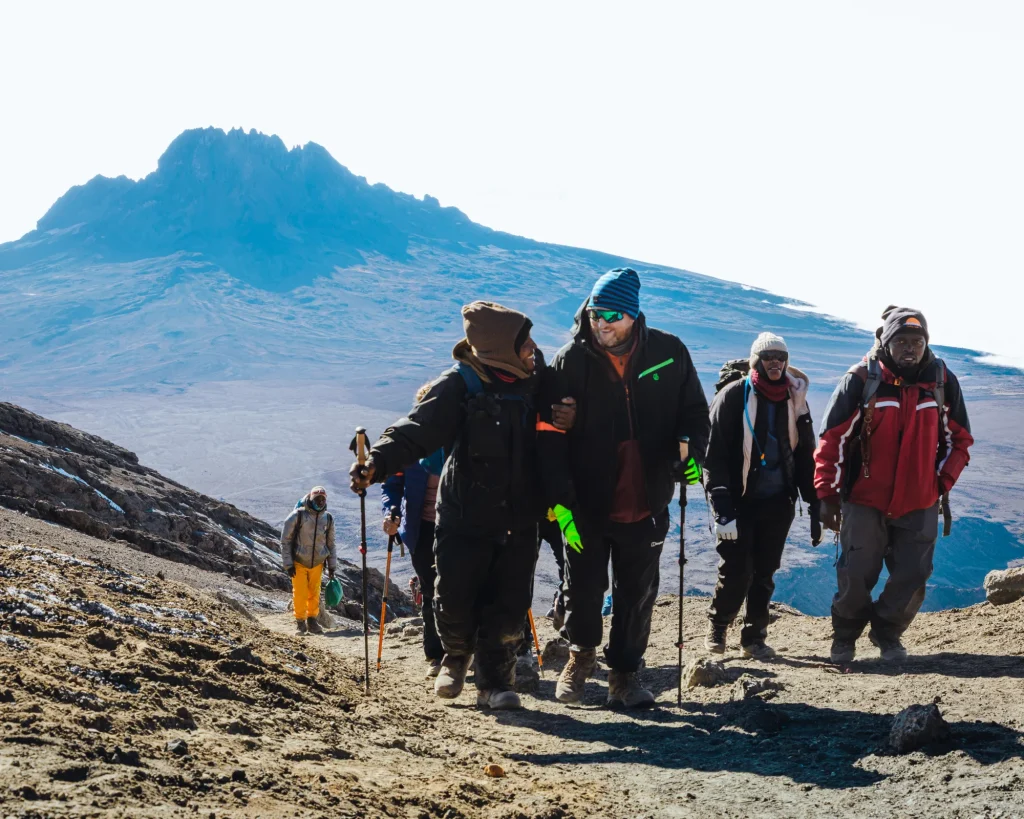
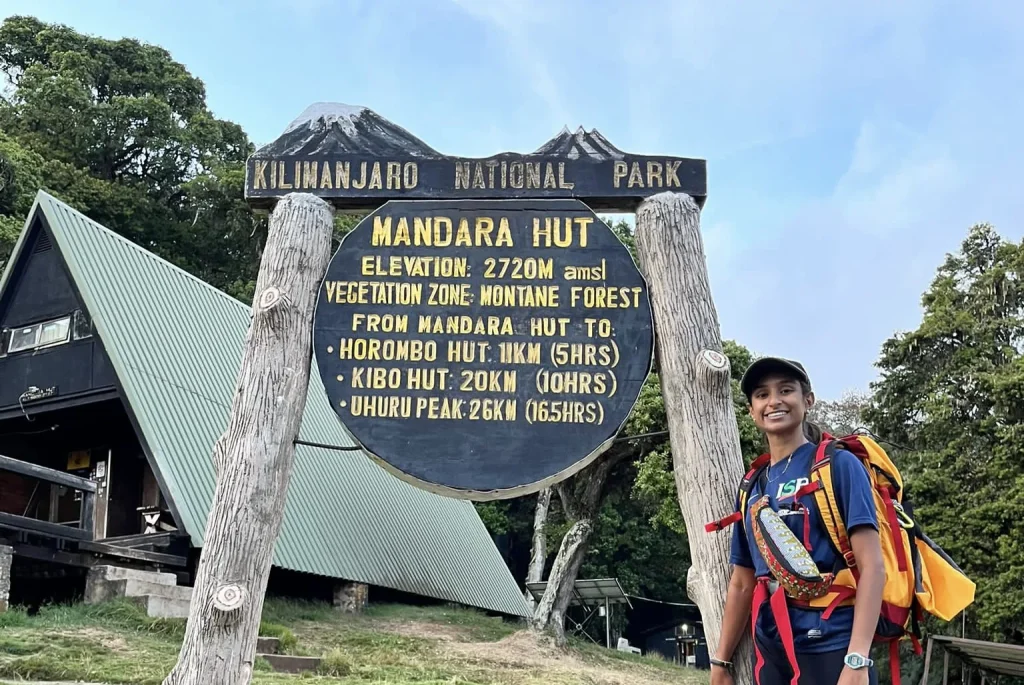
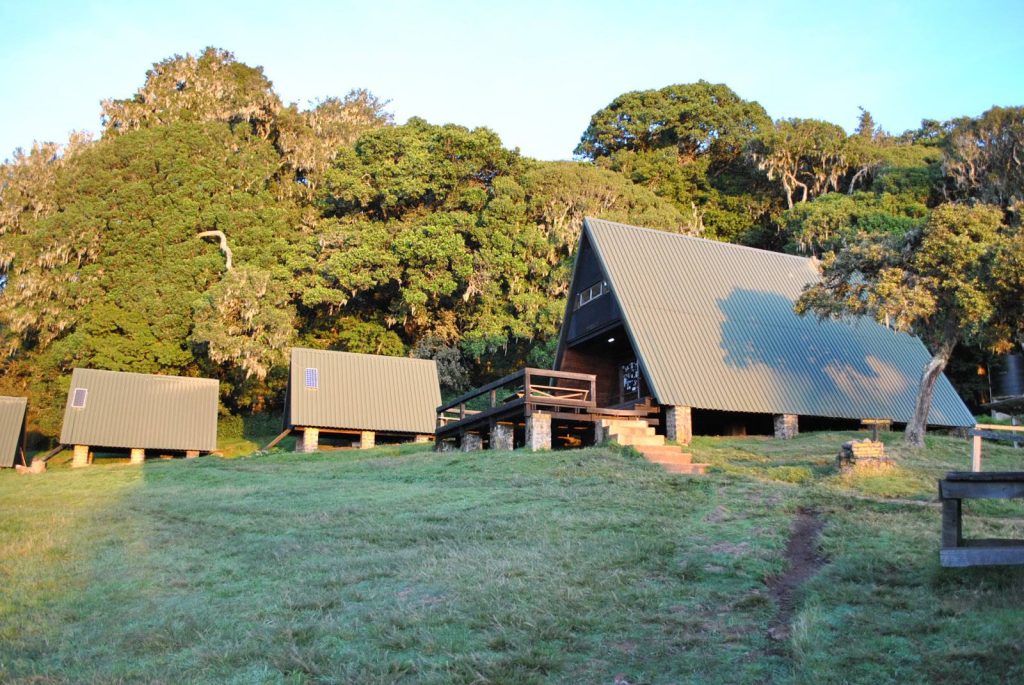
To kickstart your expedition, after an early and hearty breakfast at your hotel in Moshi, you will be picked up and transported to Machame Village from Moshi (1400m). We will carry packed lunch and mineral water. Depending on road conditions, you can drive from the village to the Machame gate, but if not, the muddy 3-kilometer trek will take roughly an hour. You begin to scale the mountain slopes by entering the rainforest almost immediately after registering at the gate office. There’s a good chance of rain in the forest, which will turn the track sloppy, muddy, and hazardous. You’ll pause for a delicious lunch break approximately halfway through and arrive at the Machame camping location late in the afternoon. Your porters (who arrived at the campsite far earlier than you) will have already set up your tent when you arrive. Before you retire to your tent for the night, the porters will boil drinking and washing water and the cook will prepare meals. At this location, nighttime temperatures might already be below freezing.
Day 2 Machame camp (2980m) – Shira camp (3840m)
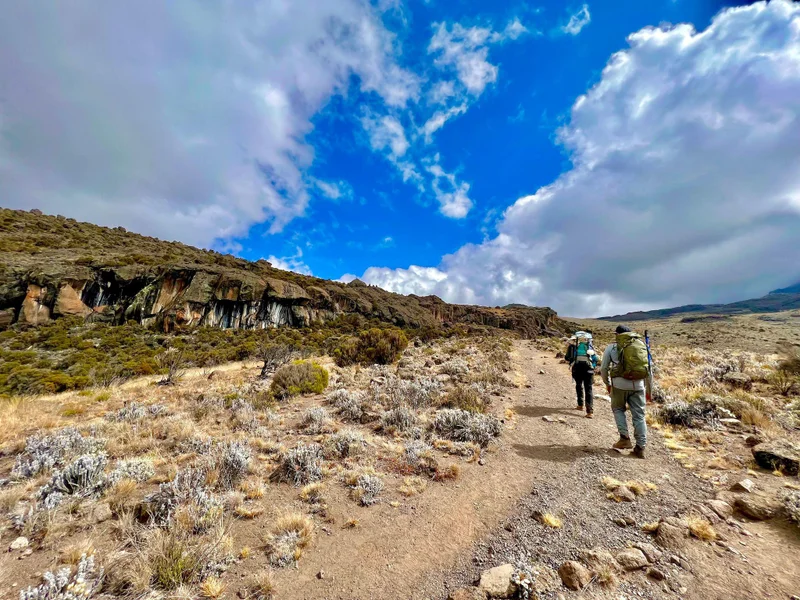
You get up early in Machame camp and ascend about an hour or so to the top of the forest, then walk for two hours across the moorland zone at a softer grade. You proceed over a rough slope onto the Shira plateau after a quick lunch and break. By now, you should be able to see the Western Breach with its magnificent glaciers from an easterly direction. You are now due west of Kibo and will arrive at the Shira campground at 3 840m after a short climb. Before serving supper, the porters will boil drinking and cleaning water. The night will be considerably colder at this exposed camp than the previous night, with temperatures falling far below freezing.
Day 3 Shira (at 3840m) to Lava Tower (at 4630m) to Barranco camp (at 3950m)
After around a 5-hour walk, the road bends east through a semi-desert and rocky environment surrounding Lava Tower, where you will reach a height of 4630m. Before hiking the rough scree trail to Lava Tower, lunch is given in a designated area (4630m). This is by far the most difficult day thus far. It is usually about this point, 1′, that some climbers begin to experience symptoms such as dyspnea, irritability, and headaches for the first time. After lunch, you descend about 680 meters to the Barranco camping area, and the entire acclimatization advantage of this day becomes apparent when you reach the high altitude of 4600 meters at Lava Tower. The descent to Barranco camp takes roughly 2 hours and provides excellent photographic chances of the Western Breach and Breach Wall. While you wait for your meal to be prepared, the camp is located in a valley below the Breach and Great Barranco Wall, which should award you with a magnificent sunset.
Day 4 Barranco camp (3950m)- Barafu camp (4550m)
Midnight wake-up for summit attempt (midnight-2am start). Steep climb to Gilman's Point (5-7 hours), then along crater rim to Uhuru Peak (5,895m) for sunrise views. Celebrate! Descend to Kibo (~3 hours), rest briefly, then continue to Horombo Huts (~5-6 hours). Long but rewarding day. Dinner and overnight.
Day 5 (Summit attempt) Barafu camp (4550m) – Uhuru Peak (5895m) – Mweka (3100m
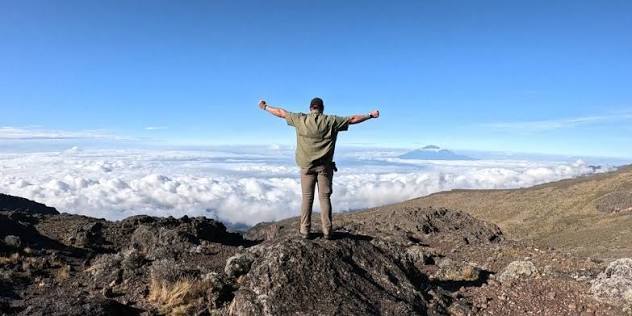
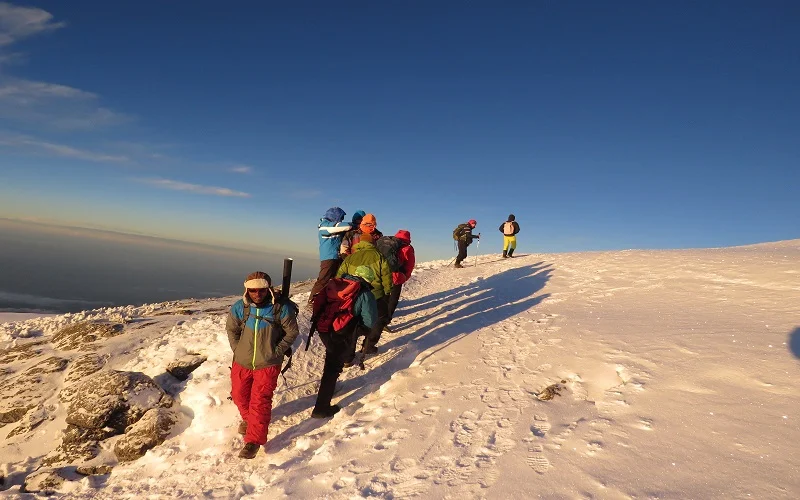
You’ll get up at 23h30 and trudge off into the night after some tea and biscuits. You’ll hike over hard scree to Stella Point on the crater rim in a north-westerly direction. This 6-hour hike to Stella Point is the most emotionally and physically demanding trip for many climbers. You’ll take a short break at Stella Point (5685m) and be rewarded with the most spectacular dawn you’ll ever witness (weather permitting). On your 2-hour trek to Uhuru Peak from Stella Point, you will almost certainly encounter snow. The amount of time you spend on the top will be determined by the weather. Stopping here for too long will make it tough to restart owing to the cold and exhaustion. Take pride in your success and remember this day for the rest of your life. It takes roughly 3 hours to return to Barafu from the peak. You’ll take a well-deserved but brief break here before gathering the remainder of your belongings. The trail is not challenging and will take you through the moorland and into the woodland through a rock and scree path. The camp is located in the higher woodland, so expect mist or rain in the late afternoon. Dinner will be provided, as well as washing water.
Day 6 Mweka camp (3100m) – Mweka Gate (1980m)
Your team will enjoy a tremendous celebration with dancing and singing after a well-deserved breakfast. You will give your suggestions to the guide, assistant guides, chef(s), and porters here on the mountain. You will return to Mweka Gate after partying for three hours. To get a certificate of completion from the National Park, all hikers must sign their names. Hikers who reach Stella Point (5685m) are awarded green certificates, while those who reach Uhuru Peak (5895m) are awarded gold certificates. Hikers will descend into Mweka village for 1 hour after getting certificates (3 kilometers). You’ll be fed a hearty lunch before returning to Moshi for some much-needed rain and more festivities.
What's Included
Included
- Breakfast, lunch and dinner, as well as hot drinks on the mountain
- Private transport from the hotel to the Park s gate (starting point for the climb), and transport back to the hotel after the climb
- Kilimanjaro National Park certificate for your successful summit attempt
- Qualified medical guides
- Rescue fees (Kilimanjaro Park rescue team fees)
- Evacuation services
- Friendly and competent Trained Mountain Guides, assistant guides, porters and professional cooks.
- Government taxes
- 3-4 liters of mineral/treated water (per Climber) provided daily during the climb
- Pulse oxy-meter carried by all chief guides
- Supplementary Portable Oxygen and Complete First Aid Kit (used in case of emergency only)
- Quality specious tents, sleeping mats, camping tables ,camping chairs and Mess/Dining Tent.(Not applicable on the Marangu route as accommodation is in A-frame huts)
Not Included
- Items of a personal nature
- Tips for guides, porters and cook (average tip is anything from US$200 to US$ 250 per hiker – depending on number of days / how many hikers in the group and route chosen)
- Personal Hiking/Trekking gears (Some Gears are available for Rent)
- Snacks, personal medicine
Location
Frequently Asked Questions
How difficult is the Machame 6-Day Route?
When comparing the 7 Days Machame route plan to the 6 Days Machame route package, the 6 Days Machame route package is harder since it excludes an extra day of acclimatization, lowering altitude sickness symptoms and increasing your chances of summiting.
What is the difficulty level of the Machame Route?
The Machame route is more challenging than the others since hikers must ascend the Great Barranco Wall on the fourth day and must settle for a steep slope towards Kibo peak on summit night. It’s worth noting that climbing Mount Kilimanjaro does not need any technical mountaineering abilities.
How can I get ready for the 6-Day Machame trek?
Any form of physical exercise will undoubtedly make climbing simpler and more fun. The more you want to get to the top, the more you need to train. Consider getting some experience climbing at high heights.
When is the best time to climb Machame?
Because Mount Kilimanjaro can be climbed at any time of year, you can climb the Machame path at any time of year. The finest months are between January and March, and June and October when it is dry and mild. The months of April, May, and November should be avoided since they are cooler and wetter.
What should I bring with me and what equipment do I require?
Some of the gear that will make your Mount Kilimanjaro climbing through the 6-day Machame route simpler will be provided by us, but some essential gear will be required for you to purchase or lease. Well-fitting mountain climbing boots, a headlamp, sunglasses, personal medication, camp, and a non-disposable water bottle are examples of this gear. The whole list of mountain gear and equipment may be found here.
What climbing skills are required for the Machame route?
Because Mount Kilimanjaro is a manageable mountain, climbers of all abilities, genders, ages, and fitness levels are invited to hike on it. To reach the summit of Kilimanjaro, however, careful preparation and intensive physical training are still required.
Always choose the longer route options with extra days/time for acclimatization; this ensures a greater summit success rate and less symptoms of altitude sickness.
What permits do I need for the Machame Route of 6 Days?
Your 6-day Mount Kilimanjaro Machame tour package includes all permits and entrance fees; anything not included will be listed on the “cost excluded list” in our itineraries. Please do not hesitate to contact us if you have any queries or want any explanations.